Tax included.
Kimono bag
These bags are made from rolls of richly patterned silk kimono material that have been in the inventory of kimono shops. Since the demand for kimono has decreased, many silk rolls that have never been used are left over in kimono shop inventories. They are old, but new.
Each roll of silk was made by hand with consummate skill, through hand weaving, hand dyeing, hand painting, and other techniques. Some of these traditional techniques have now disappeared as the market for kimono has declined.
We are now repurposing these beautiful traditional silk rolls to make elegant bags.
The kimono bag was invented about two to three hundred years ago during the Edo Period.
The design of the bag is based on the standard proportions of a kimono roll.
Making a kimono bag is basically like origami.
You start with a rectangular piece of two-dimensional cloth and make it into a three-dimensional object.
To use it as a handbag, just tie the two ends together.
This is the original way of using a kimono bag.
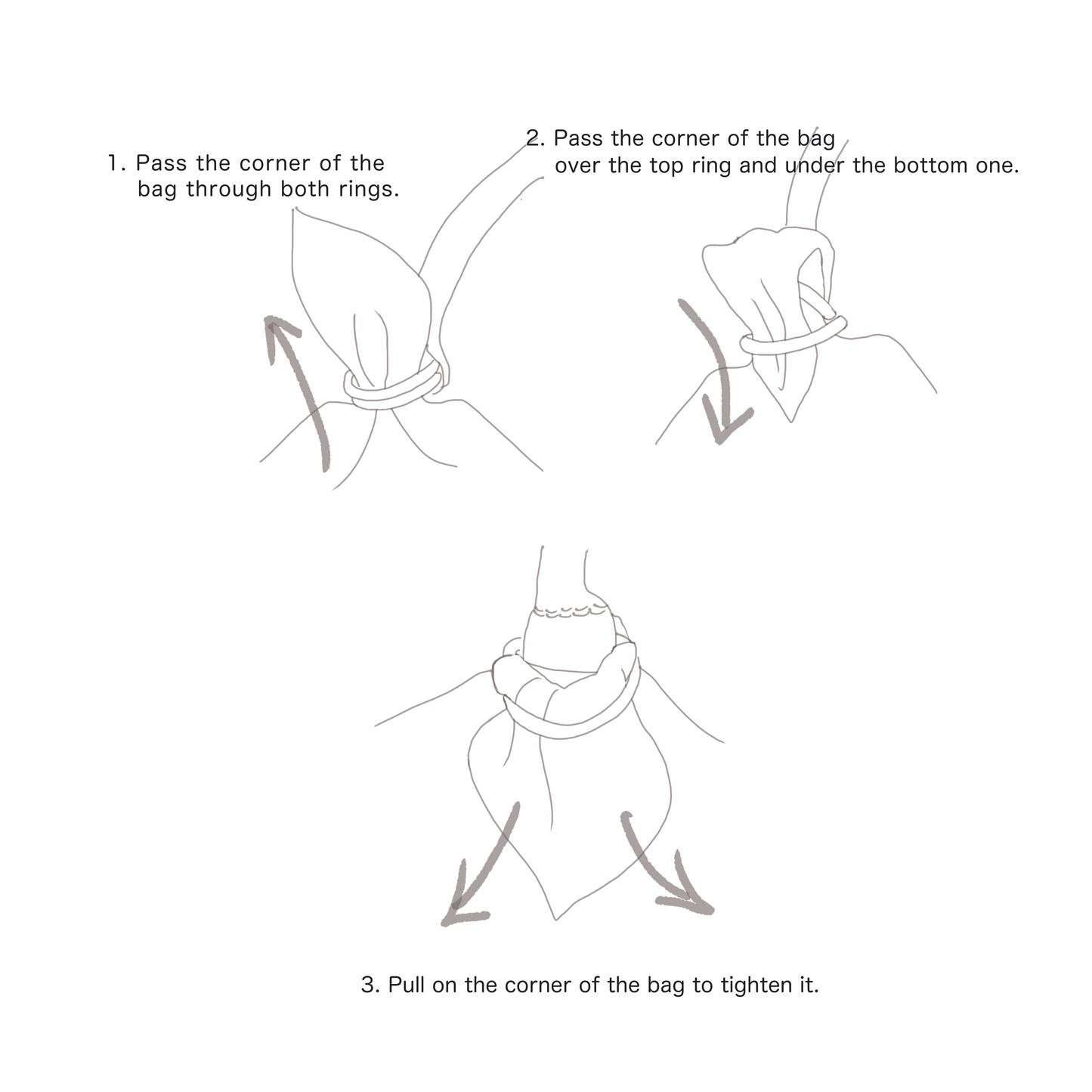
To use it as a shoulder bag, connect the ends of the bag to the two rings of a leather handle.
The bag is reversible, so you can enjoy two totally different traditional patterns.
There is also a pocket on one side.
The bag is very compact when folded.
About the incense included with the kimono bag:
Each kimono bag includes a small incense envelope.Silk Kimono bags travel long distances from Japan, and to make sure no insects harm the silk kimono bag I include incense that has a repellent effect. It is made from cloves, sandalwood, cinnamon and camphor etc.Combinations such as this have been used for over a thousand years in Japan as traditional fragrances and insect repellent.The practice is said to have started in Japan in the 6th century, and it became a cultural tradition like tea ceremony and flower arranging.
If you don’t like the fragrance you can simply hang the bag in a shaded place for a few days and the fragrance will disappear.
About textiles
Tsumugi: the silk is dyed before being woven. The silk threads have to be carefully dyed in the proper order to produce the intended pattern.
Chirimen: in the process of weaving, the horizontal threads are twisted in alternating clockwise and counterclockwise directions. This creates a texture of very fine undulations on the surface of the silk cloth.
Shibori Japanese tie-dye:
Through delicate tie-dye techniques, the outlines of patterns become fuzzy borderlines that create a dreamlike effect.
Katazome
Katazome is a method of kimono dyeing that combines stencil and wax dyeing techniques, using patterned paper and rice glue to protect selected areas from dye. Katazome was one of the most popular methods in the Edo era.
Size of Kimono bag: 48x48cm
No.1
Side A: Shibori
Side B: Hand woven Tsumugi
No.2
Side A: Hand woven Tsumugi
Side B: Katazome
No.3
Side A: Hand woven Tsumugi
Side B: Hand woven Tsumugi
No.4
Side A: Katazome
Side B: Hand woven Tsumugi
Handle (optional)
Size: 1.4x28cm
Material:leather